


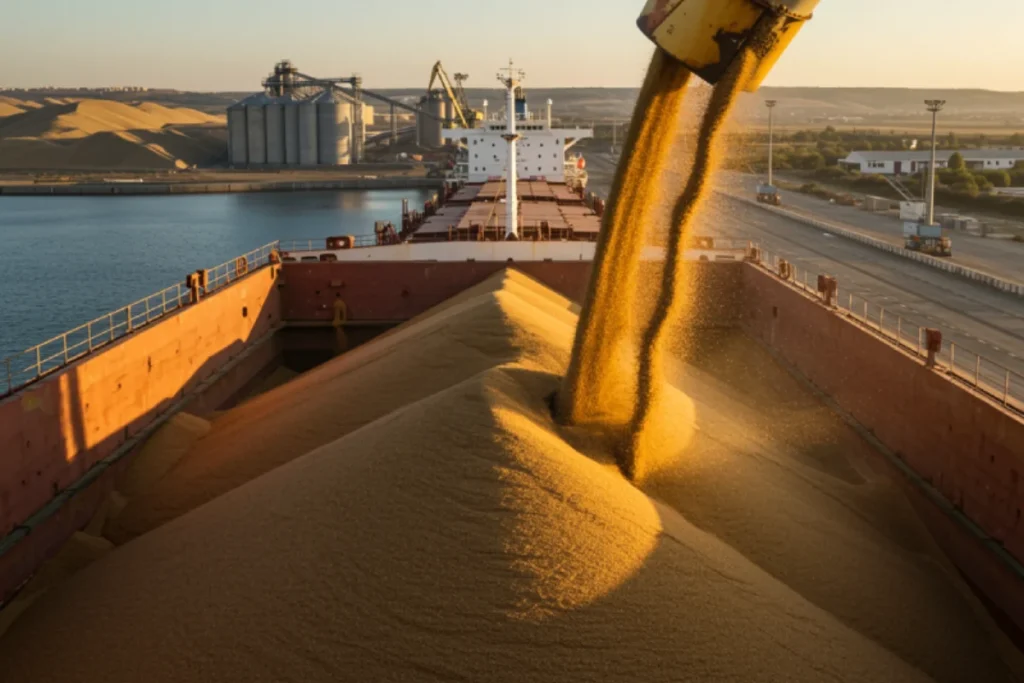
Wheat (Triticum spp.) is the most widely cultivated cereal grain in the world and a staple food for over 35% of the global population. It belongs to the Poaceae family and is highly valued for its nutritional profile, milling quality,
and versatile applications in both human consumption and industrial use. Wheat is a major commodity in international grain trade, with diverse varieties including hard, soft, durum, and feed wheat, making it essential for food security and export markets.
Typical characteristics include:
| Specification | Value |
|---|---|
| Moisture Content | 11 – 14% (depending on storage and climate conditions) |
| Protein Content | 10 – 15% (higher in hard wheat, lower in soft wheat) |
| Gluten Content | 20 – 35% (depending on wheat variety) |
| Test Weight | 72 – 80 kg/hl |
| Ash Content | ≤ 1.5% |
| Foreign Matter | ≤ 2% |
| Broken Kernels | ≤ 5% |
| Color | Light golden to reddish brown (varietal difference) |
| Kernel Size | 5 – 8 mm |
| Calorific Value | 335 – 360 kcal/100 g |
Values may vary depending on crop variety, origin, and milling quality.
• Rich source of carbohydrates, proteins, and dietary fiber.
• Excellent milling quality for flour production.
• High gluten content suitable for bread, pasta, and bakery products.
• Adaptable crop, cultivated in temperate, semi-arid, and subtropical climates.
• Long shelf life when stored in dry and ventilated silos.
• Food Industry: Primary source of flour for bread, pasta, noodles, biscuits, cakes, and other baked goods.
• Animal Feed: Lower-quality wheat used as a feed grain for livestock.
• Industrial Use: Raw material in bioethanol, starch, adhesives, and paper industries.
• Health Products: Wheat germ and bran used in nutraceuticals and dietary supplements.
• Global Trade: One of the most traded grains worldwide, serving as a core export commodity for many countries.
Wheat is supplied and exported in:
• 50 kg polypropylene bags
• Bulk shipments in vessels, railcars, or trucks
• Jumbo bags (1000 – 1200 kg) for industrial use
• Customized packaging available upon request
• Store in cool, dry, and ventilated warehouses or silos.
• Protect from insects, mold, and excess humidity.
• Non-hazardous agricultural product, safe for normal handling.
• Complies with ISO, GAFTA, and international grain trade standards.
Wheat (Triticum spp.) is the most widely cultivated cereal grain in the world and a staple food for over 35% of the global population. It belongs to the Poaceae family and is highly valued for its nutritional profile, milling quality,
and versatile applications in both human consumption and industrial use. Wheat is a major commodity in international grain trade, with diverse varieties including hard, soft, durum, and feed wheat, making it essential for food security and export markets.
Typical characteristics include:
| Specification | Value |
|---|---|
| Moisture Content | 11 – 14% (depending on storage and climate conditions) |
| Protein Content | 10 – 15% (higher in hard wheat, lower in soft wheat) |
| Gluten Content | 20 – 35% (depending on wheat variety) |
| Test Weight | 72 – 80 kg/hl |
| Ash Content | ≤ 1.5% |
| Foreign Matter | ≤ 2% |
| Broken Kernels | ≤ 5% |
| Color | Light golden to reddish brown (varietal difference) |
| Kernel Size | 5 – 8 mm |
| Calorific Value | 335 – 360 kcal/100 g |
Values may vary depending on crop variety, origin, and milling quality.
• Rich source of carbohydrates, proteins, and dietary fiber.
• Excellent milling quality for flour production.
• High gluten content suitable for bread, pasta, and bakery products.
• Adaptable crop, cultivated in temperate, semi-arid, and subtropical climates.
• Long shelf life when stored in dry and ventilated silos.
• Food Industry: Primary source of flour for bread, pasta, noodles, biscuits, cakes, and other baked goods.
• Animal Feed: Lower-quality wheat used as a feed grain for livestock.
• Industrial Use: Raw material in bioethanol, starch, adhesives, and paper industries.
• Health Products: Wheat germ and bran used in nutraceuticals and dietary supplements.
• Global Trade: One of the most traded grains worldwide, serving as a core export commodity for many countries.
Wheat is supplied and exported in:
• 50 kg polypropylene bags
• Bulk shipments in vessels, railcars, or trucks
• Jumbo bags (1000 – 1200 kg) for industrial use
• Customized packaging available upon request
• Store in cool, dry, and ventilated warehouses or silos.
• Protect from insects, mold, and excess humidity.
• Non-hazardous agricultural product, safe for normal handling.
• Complies with ISO, GAFTA, and international grain trade standards.