
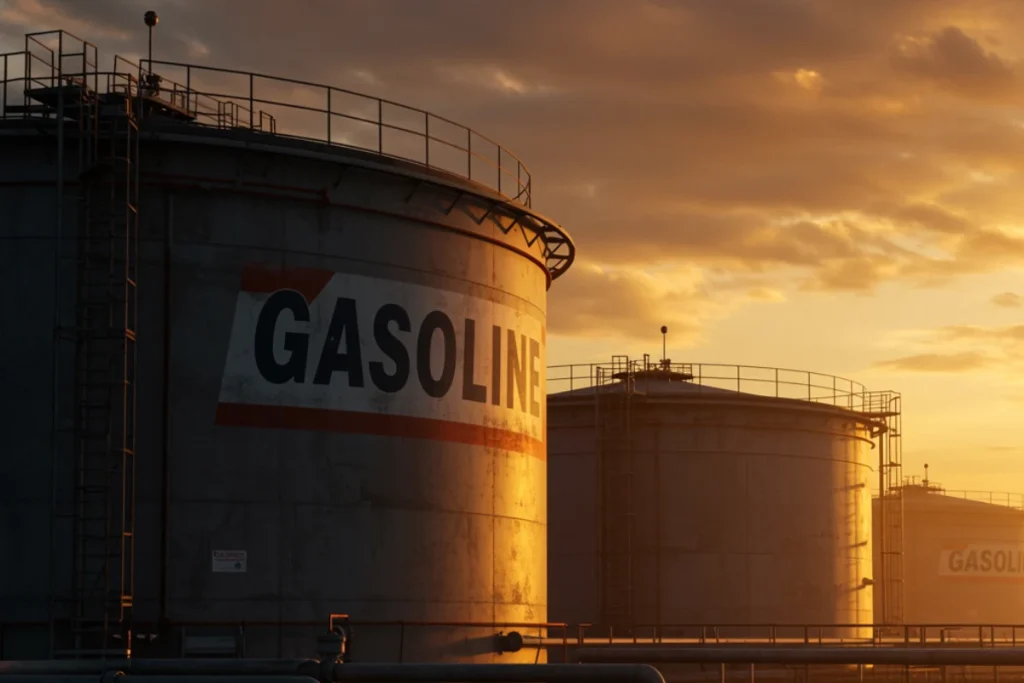
Gasoline, also known as petrol, is a refined petroleum product obtained from the distillation and blending of crude oil fractions. It is primarily used as a fuel for internal combustion engines in automobiles, motorcycles, and light trucks. Gasoline is a complex mixture of hydrocarbons, typically ranging from C₄ to C₁₂, including alkanes, cycloalkanes, and aromatic hydrocarbons. Its quality and performance are determined by factors such as octane rating, volatility, and sulfur content, making it one of the most critical refined fuels in the global energy and transportation sector.
Typical properties include:
| Specification | Value |
|---|---|
| Hydrocarbon Range | C₄ – C₁₂ |
| Octane Rating (RON/MON) | 87 – 98 (depending on grade) |
| Density (at 15 °C) | 0.720 – 0.775 kg/L |
| Boiling Range | 30 – 210 °C |
| Reid Vapor Pressure (RVP) | 45 – 70 kPa (seasonal variation) |
| Sulphur Content | ≤ 10 ppm (Euro 5/6 standard) |
| Aromatics Content | ≤ 35% |
| Olefins Content | ≤ 18% |
| Benzene Content | ≤ 1% |
| Calorific Value | 42 – 44 MJ/kg |
| Appearance | Clear, volatile liquid (often blended with performance additives) |
Specifications vary depending on refinery standards and regional regulations (e.g., Euro, ASTM, EN standards)
• High energy density with efficient combustion properties.
• Volatile and clean-burning fuel with advanced refining to reduce emissions.
• Adjustable performance through octane levels for different engine types.
• Compatibility with modern engines and hybrid fuel technologies.
• Blended with additives to improve stability, performance, and reduce knocking.
• Transportation: Primary fuel for cars, motorcycles, light trucks, and small boats.
• Industrial Use: Solvent in chemical industries, paints, and cleaning applications.
• Petrochemical Feedstock: Used for production of aromatics (benzene, toluene, xylene) and other chemical intermediates.
• Aviation: Certain grades (e.g., Avgas) used in small aircraft piston engines.
• Global Trade: Exported worldwide as one of the most consumed oil-derived fuels.
Gasoline is distributed through:
• Bulk shipments via pipelines, railcars, and tankers
• Storage in refinery tanks and distribution terminals
• Filling stations for retail supply
• ISO tank containers for international shipments
• Highly flammable liquid – handle away from ignition sources.
• Vapors are heavier than air, can accumulate and pose explosion risks.
• Avoid inhalation and prolonged skin contact.
• Store in sealed, ventilated tanks under international safety standards.
• Meets ASTM D4814, EN 228, and regional environmental regulations.
Gasoline, also known as petrol, is a refined petroleum product obtained from the distillation and blending of crude oil fractions. It is primarily used as a fuel for internal combustion engines in automobiles, motorcycles, and light trucks. Gasoline is a complex mixture of hydrocarbons, typically ranging from C₄ to C₁₂, including alkanes, cycloalkanes, and aromatic hydrocarbons. Its quality and performance are determined by factors such as octane rating, volatility, and sulfur content, making it one of the most critical refined fuels in the global energy and transportation sector.
Typical properties include:
| Specification | Value |
|---|---|
| Hydrocarbon Range | C₄ – C₁₂ |
| Octane Rating (RON/MON) | 87 – 98 (depending on grade) |
| Density (at 15 °C) | 0.720 – 0.775 kg/L |
| Boiling Range | 30 – 210 °C |
| Reid Vapor Pressure (RVP) | 45 – 70 kPa (seasonal variation) |
| Sulphur Content | ≤ 10 ppm (Euro 5/6 standard) |
| Aromatics Content | ≤ 35% |
| Olefins Content | ≤ 18% |
| Benzene Content | ≤ 1% |
| Calorific Value | 42 – 44 MJ/kg |
| Appearance | Clear, volatile liquid (often blended with performance additives) |
Specifications vary depending on refinery standards and regional regulations (e.g., Euro, ASTM, EN standards)
• High energy density with efficient combustion properties.
• Volatile and clean-burning fuel with advanced refining to reduce emissions.
• Adjustable performance through octane levels for different engine types.
• Compatibility with modern engines and hybrid fuel technologies.
• Blended with additives to improve stability, performance, and reduce knocking.
• Transportation: Primary fuel for cars, motorcycles, light trucks, and small boats.
• Industrial Use: Solvent in chemical industries, paints, and cleaning applications.
• Petrochemical Feedstock: Used for production of aromatics (benzene, toluene, xylene) and other chemical intermediates.
• Aviation: Certain grades (e.g., Avgas) used in small aircraft piston engines.
• Global Trade: Exported worldwide as one of the most consumed oil-derived fuels.
Gasoline is distributed through:
• Bulk shipments via pipelines, railcars, and tankers
• Storage in refinery tanks and distribution terminals
• Filling stations for retail supply
• ISO tank containers for international shipments
• Highly flammable liquid – handle away from ignition sources.
• Vapors are heavier than air, can accumulate and pose explosion risks.
• Avoid inhalation and prolonged skin contact.
• Store in sealed, ventilated tanks under international safety standards.
• Meets ASTM D4814, EN 228, and regional environmental regulations.

